
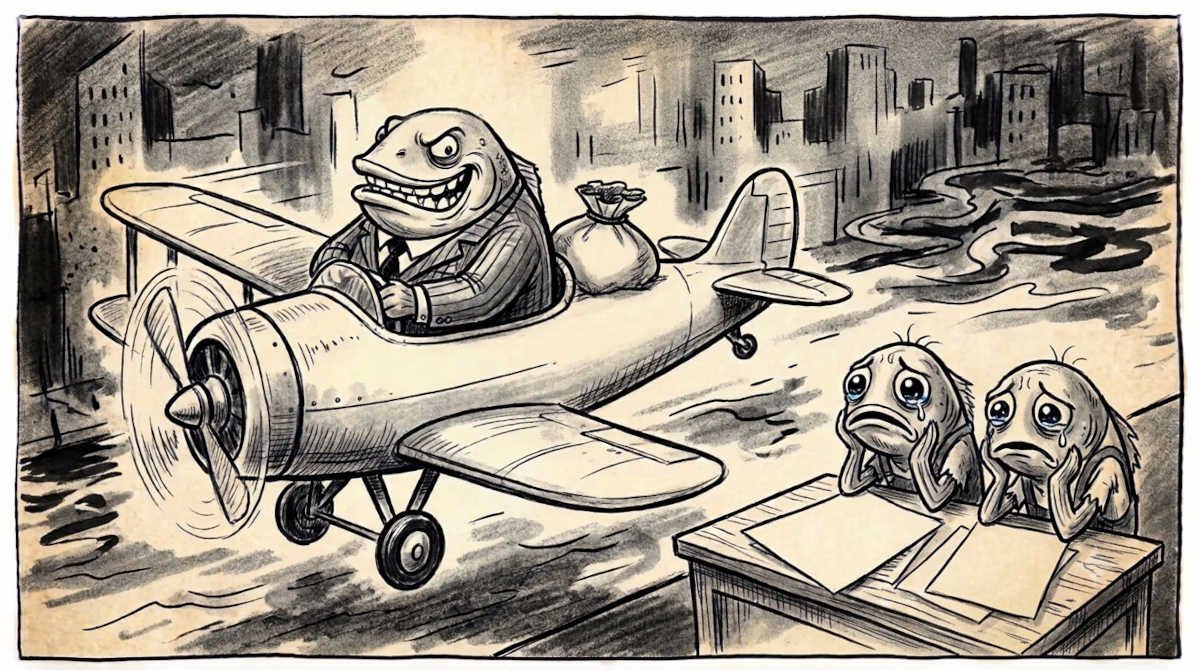
What the Banking Sector should do but won’t do
As District Collector in Dhenkanal District in 1985, I was entrusted with an unusual task. I was made the Administrator of the District Central Co-operative Bank (DCCB). Such contingency arises when a DCCB’s loan recovery remains below a critical threshold for three continuous years. NABARD then steps in, the Board is superseded and the District Magistrate is appointed as the Administrator. The Administrator remains in position, till the Bank’s performance improves and collection crosses the prescribe modest threshold.
On a lighter vein I feel, this is a cyclic process. Administrators do their best to dues get collected, cross the threshold, Bank’s coffers get filled. Status quo ante is then restored. Non-officials take over. The collections drop and again an Administrator gets appointed. Perhaps when Lord Krishna said ‘एवं प्रवर्तितं चक्रं’ in Geeta, he also had this cycle in mind.
The Secretary of the Bank was quite an efficient officer. He did brief me about the Bank’s financial position, the default position, the likely drought condition in the district which may hamper the collection of the dues during the year. It was not an easy task to meet the threshold prescribed by NABARD that year. I needed to think the matter over.
One fine morning when I was clearing some approval files, couple of cases of baby food license and an arm license case came up. Out of curiosity, I asked my PS to check with the Bank if these applicants had taken any loan from the cooperative Bank. Surprisingly two of them had done so and had not paid their installment due. I made an innocuous query on the file – ‘have they paid their Cooperative dues?’ and left the file at that. The information reached them quickly. Next week the file came with a note that the dues have been paid. I granted the requisite approval, due at my level and closed the matter.
It then occurred to me that may of the loanees need not have been the ‘poor farmers’ affected by the rain deficit. They could be men of means whose loan repayment did not depend upon agricultural activity. I asked the Secretary of the Bank about the loan size distribution and asked him to check who were the larger loanees. I also asked him to prepare a size class chart, numbering of loanees defaulting above Rs one lakh and the fraction of the Bank’s loans they accounted for. My hunch was correct. Some 7-8% of the loanees accounted for over 40% of the repayments due and a large number of small loanees accounted for a much lower fraction.
I then asked the Bank to prepare a list of the big fish in descending order of the amount due and also provide available details about the occupational status of the loanee. In the meantime, I started raising the same query about the status of the cooperative dues on all files that came to me for approval of any kind – be it arms license case, motor vehicle Act cases or baby food license for that matter.
This created a buzz. In most of the cases the dues started getting paid. In some new files, an interesting trend could be seen. The applicant’s started attaching a no dues statement from the cooperative bank on their own, along with their application. The DCCB staff were pleasantly surprised. This was a windfall for them – people proactively paying their loan.
When the list of the big defaulters was presented to me, my jaws dropped. These were not the much-maligned farmers who were defaulting their dues. It was a partial who’s who of the district. It had politicians, contractors, shop owners, even Cinema Hall owners, college and school teachers, government employees getting regular salaries and even my own office staff. I had nothing against their taking loan from a District Central Co-operative Bank, but clearly their repayment capacity was not affected by the impending draught like conditions in the district. I asked the Bank staff to pursue the loan cases of such defaulters.
There was some uneasiness. Some political representatives asked me as to why was I taking coercive steps against the loanees of the cooperative bank in a drought like year. I feigned surprise at the query, denying that there were any coercive measures. I was of course looking closely at urban influential persons whose activities and income were not at all connected to agriculture. Insisting that they pay the dues of the Bank was no coercion. Overtly no one could counter my argument, but some uneasiness was accumulating among the ‘elite’ loanees who were not used to being pressured to repay their loans. ‘It never happened earlier’ – a Cinema Hall owner cum politician remarked to me. My simple reply was “You has not then invited an Administrator of the Bank.”
An opportunity came the way of the elite loanees. The Chief Minister announced his visit to Dhenkanal where he would review the draught like situation in the district, among his other engagements. It was to be a big meeting where all MLAs and MPs from the district and other political persons were also invited. All of them had a stake in declaration of draught. It allows rescheduling of the loan repayment – an opportunity created in the name of the farmers, but availed more fruitfully by loanees who’s income would not depend on the crop position or the harvest.
The DCCB Secretary was understandably nervous. He expected some storm to be raised over the ‘coercive’ methods adopted by the Bank for collection of the loans – a red flag to the political bull. I was unfazed. I was not the Administrator by choice. It was a statutory obligation and my position as the District Collector did offer me some extra safeguard. I asked him to prepare a booklet with the details of the top loanees, print about 15-20 copies and come prepared to the meeting with details of collection from this lot in the last month.
Predictably, as the meeting began, the first agenda was the draught like situation. MLAs after MLAs; we had seven of them including the former Chief Minister Mrs Nandini Satpathy, described the draught like situation in their constituencies and complained about the coercive measures being taken by the DCCB in collecting the dues from the farmers whose backbones have been broken by the draught. Mr K P Sing Deo, the sitting MP was more guarded in his remarks, as he was aware of my pro farmer step and very non- coercive ways of persuading the big defaulters to pay up their dues. He was aware that I had called my own office staff individually and had asked them to pay the installments due. “I will request the DCCB to take a more humane approach” was all he said.
The Chief Minister, Mr J B Pattnaik, the shrewd politician that he was, had an inkling of this reaction. He quite solemnly observed that he has heard the sentiments of the people’s representatives and, given the draught like condition, he directed that the DCCB should not be adopting ‘coercive measures’ in recovering the dues from the farmers. He then looked at me and said “Agnihotri, I hope you take a due note of this.”
This was my chance. I said “Sir, as the District Collector Dhenkanal, I have no comments to make, but as the Administrator of the DCCB I have a small submission.”
“Go ahead.” he said.
“Sir, the Board of the Bank has been superseded and an Administrator appointed because the Bank has not been able to collect the minimum dues prescribed. This severely curtails the Bank’s ability to provide even small credit to genuine farmers because big loanees who do not depend upon agriculture for their income, default their repayment. These include contractors, shop owners, cinema Hall owners, college and school teachers, government employees getting regular salaries and even my own office staff. Here is a booklet giving this list which the Hon’ble CM may like to take a look at. 7 to 8 % of our big loanees account for nearly 40% of the default. I am also sharing this list with the Hon’ble MP and the MLAs requesting them to help us in persuading these loanees to repay the installments due, so that the genuine farmers can be helped. I will like my tenure as the Administrator to be as short as possible.” As if on a cue, the DCCB staff started handing over a copy of the booklet to all the MLAs and the MP.
“These people cannot have any excuse to not pay their dues and keep the genuine farmers deprived of the credit line. Besides, I am only insisting that they pay up their dues while asking for various concessions and approvals from the Government.”
There was silence in the hall. The MLAs kept looking at the list. Since I had included the office staff of the Collectorate, government school teachers and business owners, they were hard put to criticize me. Mr Sing Deo interjected, “The Collector should have kept us informed about this analysis.”
“Hmm…”, the Chief Minister said, “the decision then is that except this category of loanees, coercive measures will not be taken for collection cooperative dues this year.” This was music to my ears!
The review meeting went ahead with other agenda. But my day was made. The Secretary of the Bank was beaming from ear to ear. Ironically, the snacks and the lunch for the meeting were sponsored by the Bank – the only time I used the Administrator’s expense account!
DCCB crossed the loan collection target that very year. My term as the Administrator got over quite quickly. I was quite happy about it.
Much later, I narrated this experience to a Banker. My hunch is that all the loan waiver schemes, irrespective of which government declares it, disproportionately benefits the big loanees and the non-farmers, an ugly truth buried under the privacy norms. My banker friend could not agree more. When he took this up with the head office, he was suitably snubbed. Interestingly however, my inputs did help in one state when the loan waiver came with a cap on the amount to be waived, much to the dismay of the big fish. Alas, this could not become a norm for future cases. We continue to be happy blaming the small fish for the financial burden of the state.
Next time when you are required to sign post-dated cheques for your home or car loan, just ask the Bank if they ask the big fish for such cheques and what is the collateral when people decamp abroad with few hundred crores or even few thousand crores of loan. Amen!