
Recently, Coal India Limited won a global award for their initiative on helping children with Thalassemia get cured for life with Bone Marrow Transplant – a costly procedure indeed. Five years ago, they had won a national award for this initiative. As we speak, over 1000 children have availed this support – a remarkable achievement by any objective standards.
It is a story of how chance, luck and perseverance play a role in nurturing a policy initiative. 10 years is a good time gap to look back and reminisce how the whole initiative unfolded. It’s a mixed account of what could be accomplished, what still remains to be done, what role does chance play, how important is perseverance and how does an initiative sustain.
As an independent director of CIL looking into CSR portfolio, I was weary of the excessive emphasis on cancer. The problem was quite large, and resources of any one PSU were quite inadequate in making a dent in it. “Why not look at some ailment, where support is minimum and misery, the maximum.” I suggested. As it usually happens, if you suggest any new idea, the onus of making it work lands on your head. I was requested to identify such an ailment.
Being an inherently lazy person, I thought of picking the brains of Dr Arun Panda, a younger colleague in the IAS who was then Additional Secretary in the Ministry of Health and Family Welfare. He should be able to guide me. Besides suggestion from the Ministry would certainly carry more weight than my ad hoc identification.
Arun was his enthusiastic self. “How about Thalassemia, Sir?” He asked. “We will find a financial support useful. There is no Central Scheme to support such patients. It also fits into your ‘maximum misery’ criterion.
I did not know much about Thalassemia then. No known relative or acquaintance had suffered from it. Yes, there was a poster of Delhi Government that I used to notice occasionally while traveling in the car. I wanted to know more details. “Could we meet briefly in your office or at the India International Centre?”
“Are you at IIC, Sir?” He asked. “Can I send one of my officers who knows the subject and can explain it well? I can meet you later.” This was okay with me.
So came the officer Vinita Srivastava at IIC. She explained the issue, described the support needed for the Thalassemic patients. It was for the first time that I heard about the need for regular, almost monthly, blood transfusion. The treatment in her words was ‘painful, complex, lifelong and costly’. Any CSR support would therefore be welcome. “You should meet some of the parents, Sir.” she suggested “Nahee to andaz nahee aataa, how miserable their life is.” Her narrative was quite effective. I did not need to visit any family.
“Is there no cure? Even abroad?” Her face brightened up. “There is. But it is very costly. If the parents can afford the bone marrow transplant (BMT), the child gets cured for life.” The ‘cured for life’, bit attracted my attention.
“What do you mean by ‘cured for life’?”
“Cured, Sir. Totally. No ongoing misery, blood transfusion, drugs …”
“Then why can’s parents do it? How much does it cost?” One advantage with CIL CSR was that funds were not quite a problem. They could meet many peoples’ need, but not of course the greed of even one politician.
“12 to 15 lakhs, Sir. Utna support kahan se aayega?”
“But you yourself said that the recurring annual cost for a child is nearly 1 to 1.5 lakhs. So this is equal to 10 years expenditure that is front ended. But all the misery is gone. But are you sure the child is ‘cured for life’? I was skeptical.
My calculation was straightforward. Recurring support had its limitations in terms of its effectiveness and more important monitoring and record keeping. A one-time cure was simple, measurable, and had a lifelong impact. Why not just support about 100 children from BPL families and see how it pans out. I was tentatively confident of getting CIL to support up to 10 Crores.
“But what about the other children Sir, who need regular care? They also need support” She pleaded.
“I do see your point. But I would rather keep it simple. But you can try your luck and suggest CSR support for both the parts – the recurring palliative care and the BMT. But who will be the CSR recipient? The NHM.”
“No, Sir. It can be one of the NGOs. Thalassemics India.”
“But why them? There may be other NGOs as well.”
“They are good, Sir and have been working with us for some time now.”
“Will Ministry recommend their proposal? That will take the bother off our head.”
“That can be done, Sir. We will endorse their proposal.”
“What about the cost? Will Ministry Vet the figure of 10 lakhs per BMT?”
“Easily, Sir. The actual cost is more.”
“But why can’t you bargain with the Hospital to peg it to 10.00 lakhs? As the number of cases go up, the cost should come down.”
“We will try, Sir.” Her voice indicated that she was not quite convinced about it.
“And what about vetting the list of hospitals? The Ministry should do that. We will not select the hospital ourselves. We don’t have the bandwidth to do that.”
I was being cautious. In a recent CSR Conclave for PSUs, I had clearly talked about the constraints on the Public Sector CSR. The last thing one would want is for the CBI or the Vigilance people knocking at your door five years down the line and asking you as to why did you do that good deed. As such, the cost, the NGO, the designated hospitals all need to be validated by the Ministry. Vineeta agreed.
In due course the proposal came to the CIL. It went through couple of internal committees and finally came to the Board level. I was keeping my fingers crossed. I had asked Vineeta to come and make a presentation to the Board personally. She had come well prepared. She placed all the details. There were many questions regarding the support for the recurring care. I had anticipated this and suggested that we focus on the clear measurable and high impact action of supported BMT through the designated hospitals and costs vetted by the Ministry. We should also restrict our support to households with an income cap and, as the treatment is more effective at younger ages we may restrict it to children under 12 years of age. While there was a general agreement on this option, one Director struck a discordant note that the cost was too high. He had few other rather negative queries. This was when Vineeta said “Sir, ek baar un parents se mil lijiye.”
“How will that help?” he was not convinced.
“Sir, we – the normal parents die only once. These parents die nearly every month, if not daily. I do keep meeting them Sir.” She was nearly in tears.
There was a strong silence in the Board Room. The Joint Secretary, who was representing the Coal Ministry broke the silence and said “It is just 10 Crores and the cause is worthy. Why don’t we give it a try and review the matter once 80 to 90 cases get covered.” That sealed the issue. Ministry’s representative on a PSU Board is a powerful voice indeed.
CIL communicated its approval. The scheme went ahead in early 2017. Lot of work was still to be done, creating the SoPs, releasing money to the hospitals on time, chasing the MoHFW in approving empanelment of new hospitals. But God was kind. Things moved smoothly.
CIL came in for praise at an international workshop in Bengaluru, where this described as the only CSR of its kind in supporting children with Thalassemia on a systematic basis.
One day, a phone call came from the new Joint Secretary Coal. He did have a tribal person from Jharkhand working at his house who used to take one day off every month stating that he had to go for blood transfusion for his child “khoon chadhane jana hai.” The JS realized that this must be a case of Thalassemia which it indeed was. The JS then requested me if I could get this child admitted to Vellore for treatment expeditiously! I was more than glad, specially because the proposal for further support for next lot of 100 children was going to come for consideration of the Board. Then 200 looked a big number. Today Cil has already crossed the 1000 mark.
Did all always go well? Not quite. We learnt our lessons the hard way. Death of one child earlier in the scheme taught us the lesson that the child needs to be kept in the institution for a month so as to avoid the danger of secondary infections, some of which could be fatal. I still remember the stoical face of his father. It was no one’s fault, he said, we hurried in bringing the child back home. We also found that the Ministry of Health which had informally promised to take over the scheme after the 200 mark has yet not done it. The expected cost reduction once the number went up has not happened. Nevertheless, CIL is not complaining. Every new incumbent has enthusiastically supported the scheme. The original lot is no longer there. The scheme continues unhindered.
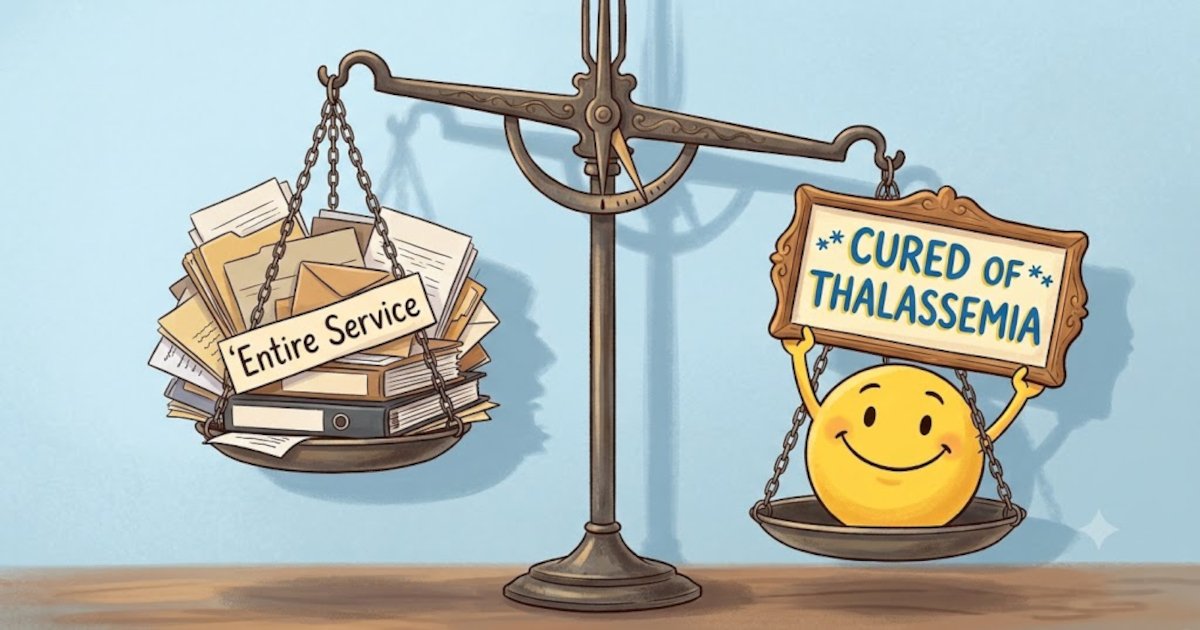
All along this journey I had kept my role under wraps. I strongly believe that there is an inverse relationship between one’s personal visibility and spread of one’s idea. Here the idea was too precious to be taken a chance with. I have refused to give interview to journalists about this initiative and my role. I have avoided CIL functions celebrating the crossing of the 100 patient mark even though the parents were very keen to meet me. The immense satisfaction I got watching the number grow is a reward enough. Only in my policy class I have described this initiative and closed the narration by telling the students that if my 36 odd years of public service were to be placed on one side and 36 children ‘cured for life’ were to be placed on the other, the scales will always be tipped in favour of the children in terms of my job satisfaction ….
The scale continues to tip further and further ….