
After the general elections in 2009, I requested then Cabinet Secretary for a posting to Mumbai for certain personal reasons. He was sympathetic and as chance would have it, the post of Joint DG Shipping was getting vacant in Mumbai. “It is a light posting. Go join there. You have had your plate full for a while. You can have some work – life balance.”
The ‘full plate’ alluded to my work in the Cabinet Secretariat as the Joint Secretary looking after all Security related issues, internal and external, among other tasks. Events we dealt with in the 2007-2009 window included Kosi floods, Gujar agitation, multiple bomb blasts including the 26/11, left wing extremism and general elections of course (not as a disaster through!). Cabinet Secretariat is a compact, high coordination office. More about my stint there in some other narration. But suffice it to say, I had forgotten what holidays meant.
Quite soon, I realized, that the ‘light posting’, as Joint DG Shipping ,was a misnomer, except that one did get weekends free. Then DG shipping, Laxmi Venkatachalam being a friendly and experienced boss also allowed me to take a few things easy. But that was not to last long, and within few months, I was elevated to the position of DG Shipping, with Laxmi heading to the ADB (Asian Development Bank).
My tenure was marked by multiple crises, Somalian Piracy being a major one among these. Accident of two ships near Mumbai Port, couple of unmanned ships landing at Juhu beach, one literally in the backyard of Shri Amitabh Bachchan, rescuing a sinking ship and similar other incidents added ECG like spikes to an already full plate. But God had also been kind too. No ship with Indian flag had been hijacked, and, of the three to four hundred Indian crew taken hostages, we did have all of them coming back alive, except one tragic case.
Each of these crises attracted considerable TV coverage. The channels reporters were quite a persistent lot and competed with each other to have a ‘byte’ from the DG. If one channel managed to get a byte, the other channels would pressurize their reporter to ‘eqaualize’! I for one, am not in favour of the TRP approach to emergencies. So, I had streamlined things quite considerably. If there was any development, a press release will go by 4 to 5 pm to all accredited reporters; a list drawn up in advance. Any questions asked on phone will meet with a counter question – “press brief padha hai kyaa”? That would tackle major points.
Occasionally I will do a press briefing where all TV channels would get a similar ‘Byte’. The Hindi and Marathi channels liked me as I would answer in fluent Hindi and Marathi. Aaj Tak staff had a special soft corner for me when they found out that I had personally known late Surendra Pratap ‘SP’ Singh who had set up Aaj Tak – rather its predecessor DasTak. The Marathi channels were also quite happy to have the Q&A in Marathi. The ‘Big’ 2-3 English channel bigwigs will fail to understand as to why I will not give ‘exclusive’ bytes to their reporters. But soon they gave up. My ‘equal treatment’ mantra did come to be appreciated. I was also clear that sensitive matters such as the status of hostages were not a material for a ‘ball by ball commentary’ or breaking news. Milestones, as and when they were crossed, would be informed to all.
My appearances on TV became rather frequent a thing, generating a thumb rule for my acquaintances, including Faculty and students at C-TARA at IIT Bombay where I would visit occasionally to give a talk, that all was well if my face didn’t appear on the screen.
I had competent colleagues with long experience in Shipping and they would keep track of the hostage issue. Government of India had a firm stand that it does not negotiate with the pirates. This task was left to the Shipping Companies. Much of this would happen from the ‘green room’ or track II and was not meant for public consumption.
But hostage families were not bothered about these ‘protocol’ nuances. They wanted to be briefed and as usually happens, most of them would like to talk only to the DG, and not to anyone below that level. I also had another advantage; ability to speak in Hindi, Marathi, Bangla, Odiya and even few Tamil sentences. So, the families of the hostages were found talking to me quite reassuring. I also used to give them lot of latitude, that was the minimum I could do. Counselling a large number of such families was a tough task creating some burn out which, a psychiatrist friend later told me, I did cope with rather well.
The Hon’ble Minister Shipping, Mr Vasan, found this communication advantage of mine quite handy. Whenever the hostage families would go to meet him in a delegation, his standard instruction was that the DG must be there. Once the meeting would start, he would say a few sentences and then inform them poker faced, “Now, the DG will tell you in your own language.” After I would do my bit and long discussions will get over, he would make few short remarks in English.
Language does make a difference. One rather aggressive mother, Mrs Sumitra Pawshe was from Maharashtra. She made a angry statement to the Minister in her Marathi style Hindi. So, during my briefing, I deliberately added a Marathi phrase in my conversation. Her immediate reaction was “Saeb tumhala Marathi yeta?” (Sir, do you speak Marathi (as well)? We had a more cordial conversation after that.
The frequency of my Delhi trips, the craziest being 4 trips in one week, made my face and Captain Harish Khatri, a strong help in dealing with the Piracy crisis, very familiar to the AI staff at the check in. So much so, that one morning the staff at the check gate while giving me my Boarding pass, asked “Aaj Captain Khatri nahee aaye kyaa?” That indeed took me by surprise. Of course, both of us like true Bombay-ites, used to make only day trips to Delhi
As coincidence would have it, many of the crises did actually arise just before a day or two of the week-end; keeping me and my colleagues busy doing crisis management over the weekend. This, in fact, led my son, then in US, to ask as to how my weekends always became the target of these crises and not the weekdays themselves. I had no answer except a philosophical response that the pirates didn’t take any prior permission to strike – else we could have scheduled it better!
Coming back to the case of Mrs Pawshe, in one meeting at Mumbai, she did lose her cool as the release of her son, Sachin Pawshe a Sailor was getting delayed. I did have an inkling that the release was round the corner, but prudence made me not to drop any hints. The hostage release can be a very tricky business. I am a firm believer in Murphy’s law, and follow the principle of not jumping the gun. But I did observe that we were making all efforts that could be made and will keep her informed. She was indeed entitled to get angry, but could she make one promise to me? “Mee kaay promise karu?” (What promise could I give you.) She asked, rather puzzled.
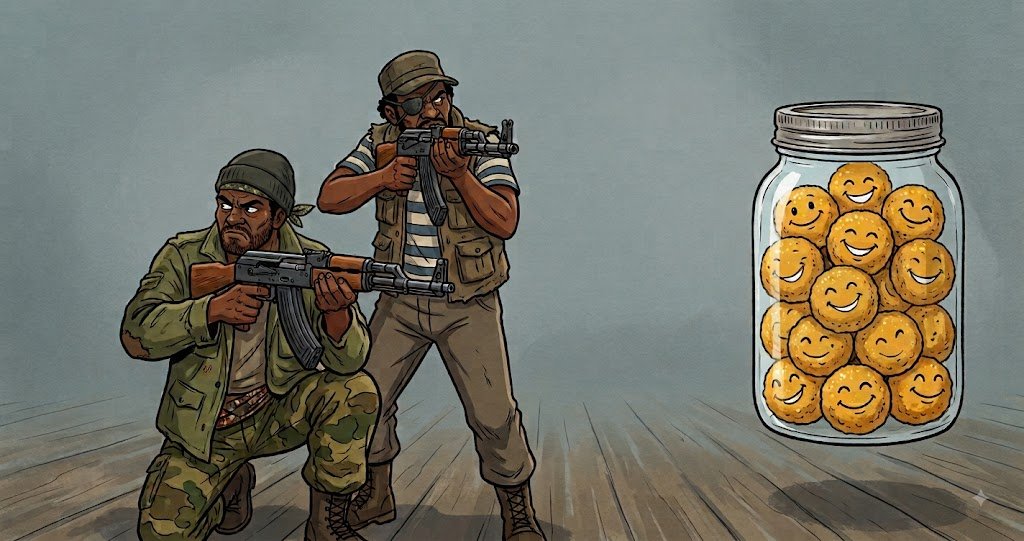
“The day Sachin is back” I said with elan, “I want home-made besan ke laddo on my table.”
Her face is still etched in my mind; a mix of anger, smile and yes, a hint of tears! She fumbled for a while and then said “Saeb , ataa tumhi asa mhatlyaar me kaay bolu? Hasoo kaa radu?” (Sir, what can I respond now that you are sating this? Whether to laugh or to cry.” I had mollified her. Other members of the delegation also started convincing her that her son will be back. DG sahab was right in being optimistic etc.
Sachin did indeed get released quite soon thereafter. He still thanks the Pakistani navy for his rescue and looking after him well during the post captivity transit. Usually we let the matter be and not jump to the press to defend ourselves. The return of the hostage was a reward enough.
It was probably a week after Sachin’s release, that Mrs Pawshe landed in my office without any prior appointment. My staff informed me that she insists on seeing me right away. I was somewhat puzzled. Was it about some pending claims, some arrears, or some request for an on shore? But prudence suggested that I hear her grievance, whatever it may be.
Enteres Mrs Pawshe in my office chamber. Did not take her seat. Kept silent for a few seconds, than rather awkwardly, took out a steel container from her cloth bag and said with the hint of a lump in her throat, “Saeb, tumche besanache ladoo.”
It was the sweetest reward that my moist eyes have ever seen in my service life.
May God bless her!